Quick answer
Most Canadian homes do well with a 1/3 HP or 1/2 HP submersible sump pump with a cast-iron or all-metal body, a check valve on the discharge line, a sealed lid, and a battery backup pump for storms and power outages. If your pit fills quickly during spring melt or heavy rain, or the water has to be pushed up more than about 3 m (10 ft), step up to 1/2 HP or more.
This guide is written for DIY homeowners. It covers how a sump pump works, which type and size to buy, how to replace one yourself, how to keep it running through a Canadian winter, and which local rebates can help pay for it. If you're a contractor, see our contractor guide to choosing sump pumps.
The basics
What does a sump pump do?
Groundwater around your foundation is collected by weeping tile (perimeter drain pipe) and carried to a pit in the basement floor called the sump basin. When water rises in the pit, a float switch turns the pump on. The pump pushes the water up a discharge pipe and outside, well away from the house. When the level drops, the pump shuts off.
Without a working pump, that water has nowhere to go. It builds up under the slab and against the walls and ends up as seepage, wet carpet or a flooded basement.
Signs you need a sump pump (or a better one)
- Water on the floor along the wall-floor joint after rain or snowmelt
- A pump that runs constantly, cycles every few seconds, or can't keep up during storms
- A pump older than about 7–10 years, or one that hums, rattles or smells burnt
- Musty smells, efflorescence (white residue) on walls, or high humidity (see moisture vs. leaks)
- Your area has frequent power outages during storms and you have no backup
Choose your pump
Types of sump pumps
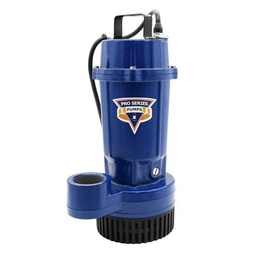
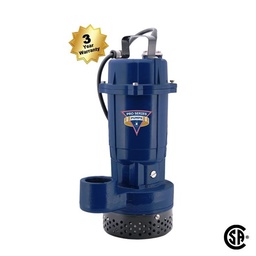
Submersible
The whole pump sits in the pit, underwater.
Best for: Most homes. It's quieter, cooled by the water around it, and lets you seal the pit with a lid.
Pedestal
The motor sits on a column above the pit.
Best for: Very narrow or shallow pits. It's easy to service but louder and can't take a sealed lid.
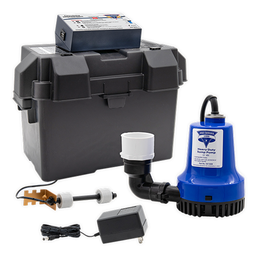
Battery backup
A 12V DC pump that runs off a deep-cycle battery.
Best for: Keeping the basement dry when the power goes out or the main pump fails.
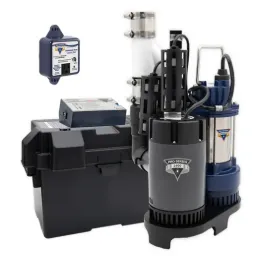
Combination system
A primary pump and a battery backup pre-assembled on one discharge.
Best for: The easiest way to get full protection in one install.
Sizing
What size sump pump do I need?
Horsepower is only part of the picture. What matters is how many litres or gallons per minute the pump moves at your lift height (the vertical distance from the pump to where the pipe leaves the house). Every pump has a performance chart, and it moves less water the higher it has to push.
DIY sizing test
During a heavy rain, time how long the pit takes to fill from "pump off" to "pump on." If it refills in under a minute, or your current pump barely keeps up, size up. A bigger pump isn't automatically better, though. An oversized pump in a small pit short-cycles, which wears out the switch and motor faster.
Cast iron vs. thermoplastic
Cast-iron and all-metal pumps shed motor heat better and generally last longer, so they're the better pick for basements that see regular water. Thermoplastic pumps are lighter and cheaper and are fine for occasional use. For heavy inflow, browse our higher-capacity primary pumps.
Float switch types
Tethered float
Swings on a cord. It's reliable but needs a wider pit (about 18" or more) so it can't snag on the walls.
Vertical float
Slides up and down a rod. Good for narrow pits.
Electronic switch
Has no moving float. It senses the water level, and some models include alarms.
Storm protection
Why a battery backup is worth it in Canada
The storms that flood basements are often the same storms that knock out power. Spring melt can also keep a pump running for days, and a primary pump can fail from a stuck float, a jammed impeller or simple age. A battery backup pump sits above the primary pump in the same pit and kicks in automatically if the water keeps rising.
- Choose a backup sized for your inflow. Larger units pump longer and move more water per charge.
- Use a deep-cycle battery, such as a maintenance-free AGM standby battery, kept in a battery box, and check it at least twice a year.
- Look for a controller with an alarm so you know when the backup has run or the battery is low.
Options: Pro Series 1000, Pro Series 1850, PS 2400-B2, or a pre-assembled PS-C30 combo system. Learn more about Glentronics sump pumps.
Don't skip these
Essential sump pump accessories
Check valve
Stops the water in the discharge pipe from falling back into the pit each time the pump shuts off. Without one, the pump re-pumps the same water and wears out sooner. "Klunkless" valves are quieter. 1.5" Klunkless check valve · all check valves
Sealed sump lid
Keeps out debris, humidity and soil gases such as radon, and stops kids and pets from getting into the pit. Solid basin cover
Proper basin
An 18" wide pit gives floats room to work and lets you fit a backup pump. Sump basins & lids
Also protect the discharge line from freezing. See where to discharge below.
Step by step
How to replace a sump pump yourself
Swapping a pump in an existing pit is a manageable DIY job for most homeowners. It usually takes 1–2 hours. Always follow the manufacturer's instructions for your specific pump.
Unplug the old pump
Confirm it's off. Never reach into a pit with a plugged-in pump.
Disconnect the discharge pipe
Undo it at the union or coupling, then lift the pump out. Expect some water to drain back.
Clean the pit
Remove silt, gravel and debris so they don't clog the new pump's intake.
Set the new pump on a solid, level base
A brick or paver works, so it doesn't sit in sediment. Make sure the float can move freely without touching the walls.
Build the discharge
A male adapter at the pump, then PVC pipe, then a check valve (arrow pointing up, away from the pump), then a union or flexible coupler so the pump can be removed easily next time.
Drill a small weep (anti-airlock) hole
Put it in the discharge pipe between the pump and the check valve, if your pump manufacturer calls for one. It's typically about 1/8"–3/16" and placed just above the pump.
Plug the pump into its own dedicated outlet
Don't use an extension cord. Check your local electrical code for outlet requirements.
Test it
Fill the pit with a bucket of water and watch the pump switch on, empty the pit and shut off cleanly. Check every joint for leaks.
Fit the lid
Ideally, add a backup pump and alarm while the pit is open.
Need a new pit?
Cutting through the basement slab, tying in weeping tile and setting a new basin is a much bigger job. It often needs a permit, and some rebate programs require a licensed plumber. Check before you start. Our DIY installation guides can help you plan.
Discharge & winter
Where should a sump pump discharge?
Away from the foundation
Direct the water to your lawn or garden, at least 2 m from the house, so it doesn't soak back into the soil and return to the pit.
Never into the sanitary sewer
Don't send it into a floor drain either. Most Ontario municipalities prohibit this because it overloads sewers and causes backups in your neighbourhood.
Plan for winter
A frozen or snow-buried discharge line can send water back into the house or burn out the pump. Keep the outlet clear of snow and ice, slope the pipe so it drains, and add an overflow fitting. How to install freeze relief
Keep it running
Sump pump maintenance checklist
Save money
Sump pump rebates in Ontario
Several Ontario municipalities help pay for flood protection. Amounts and rules change, so always confirm on the official page before buying.
Ottawa
The Residential Protective Plumbing Program offers rebates for a sump pump in an existing pit or in a new pit, plus the building permit fee.
ottawa.ca/rpppKingston
The Utilities Kingston Preventative Plumbing Program offers financial help with sump pumps, backwater valves and more, plus a free in-home visit.
Program guideToronto
The Basement Flooding Protection Subsidy Program covers sump pumps, sump alarms and battery backups.
toronto.caImportant: most programs require pre-approval, a permit and/or a licensed plumber. A pure DIY install may not qualify, so read the rules first.
Common questions
Sump pump FAQ
How long does a sump pump last?
Most last around 7–10 years, depending on how often they run and their build quality. Cast-iron pumps in pits that are kept clean tend to last longest.
Why does my sump pump run constantly?
Common causes are a high water table during spring melt, a missing or failed check valve, a stuck float, a pump too small for the inflow, or discharge water flowing back toward the house.
Can I install a sump pump myself?
Yes. Replacing a pump in an existing pit is a common DIY job. Installing a new pit means cutting the slab and tying in drainage, and it may need a permit. Rebate programs often require a licensed plumber.
Do I really need a battery backup?
If a flooded basement would be costly, or you get storm-related power outages, a backup is cheap insurance compared with the damage. Some municipalities subsidize backups too.
Should the sump pit have a lid?
Yes. A sealed lid cuts humidity and odours, blocks debris, keeps kids and pets safe, and helps limit radon entry. Consider a radon test kit too.
What size sump basin do I need?
An 18" diameter basin, roughly 22"–30" deep, suits most homes and leaves room for a primary and a backup pump. See our sump basins.
Get the right sump pump for your basement
My Basement Solutions sells professional-grade sump pumps, battery backups, basins and fittings, the same equipment waterproofing contractors use, shipped to DIY homeowners across Canada.
Shop sump pump productsAsk what fits your basement
Not sure what you need? Call 613-800-2507 or email info@mybasementsolutions.com with your pit size, lift height and how often your pump runs, and we'll recommend a setup.